
Apps to discover cool movies according to your mood.
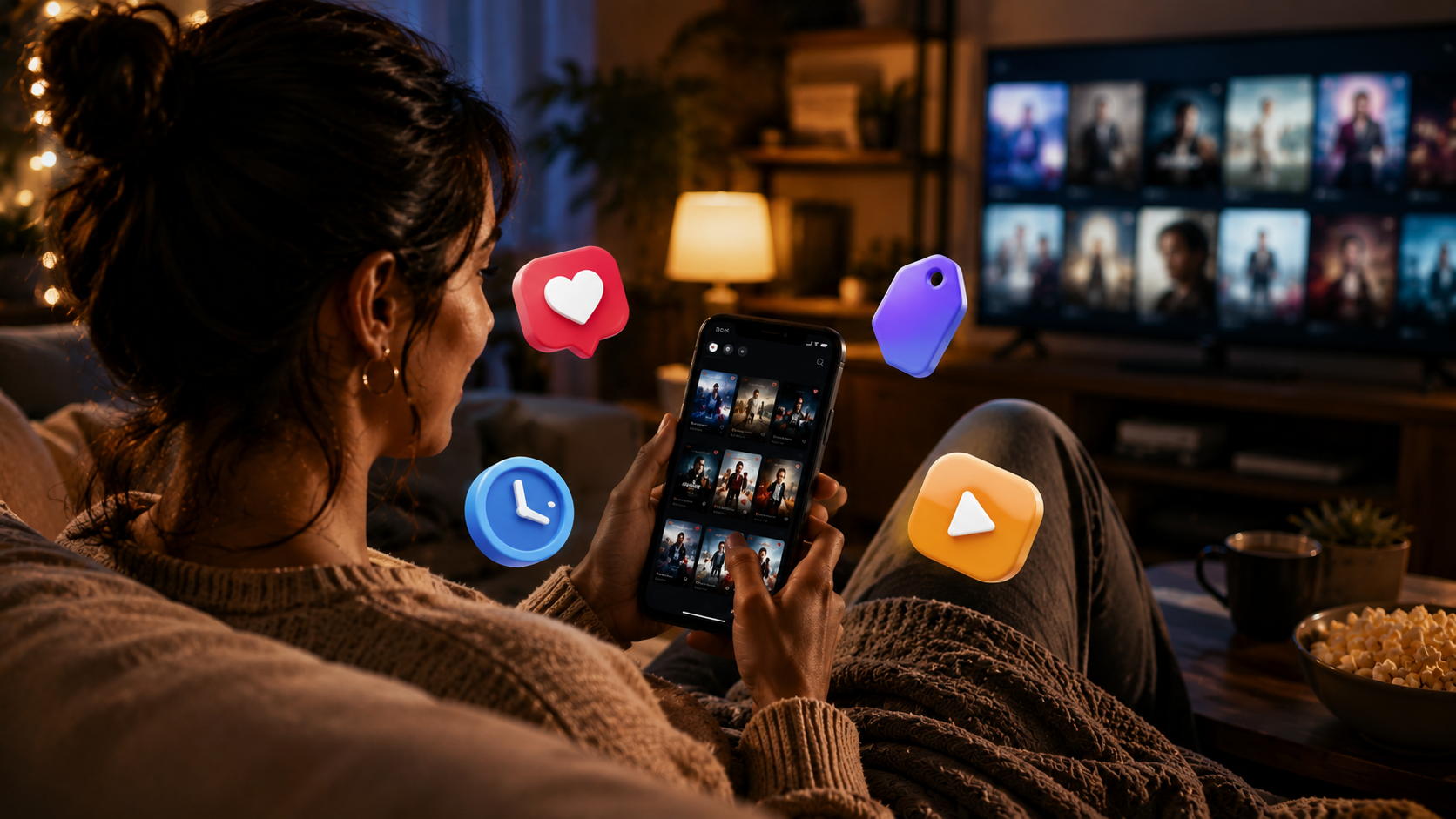
Choosing a movie seems simple until you open the catalog and realize the problem isn't a lack of options, but rather an excess of them. Between limited time, tiredness, company, and personal taste, the search becomes an emotional filter before it's a purely technical choice.
That's where apps to discover movies They are gaining ground in everyday life: they help reduce noise by cross-referencing preferences, genre, age rating, availability, and other signals that make the decision less random. The most useful point is not "finding any title," but rather understanding how to select something that matches the moment without relying on guesswork.
In many routines, what a person calls humor is a mixture of energy, context, and intention. There are nights when light comedy is appropriate; on others, a slower drama; and sometimes, all that's needed is something short that doesn't demand much attention.

What does it mean to choose based on humor?
Choosing based on humor isn't exactly choosing based on emotion in the abstract sense. In practice, it means looking at the state of the moment and translating that into objective criteria, such as rhythm, duration, theme, intensity, and the level of attention the film demands.
This explains why two people can enter the same app and come out with different choices. Those who arrive tired after work tend to prioritize something lighter; while those who want a "thought-provoking film" usually seek slower-paced works, with internal conflicts and less narrative noise.
Discovery tools often organize this process using filters and metadata, rather than literally reading a person's mood. Film platforms and databases typically work with search, discovery through filters, and personalization based on behavior and preferences.
apps to discover movies
In practice, this type of app acts as a layer between you and streaming catalogs. It gathers what's available, shows you where to watch, organizes by themes, and helps narrow your search based on your actual preferences.
This detail is important because the catalog changes depending on the country, platform, and exhibition rights. A title that appears in one place may not be available in another, and therefore it is more worthwhile to use tools that show availability and filters than to rely solely on memory.
Some streaming guides allow you to filter by genre, age rating, rating, price, and availability. The idea is to move beyond generic searches and find combinations that more closely match what the person actually wants to watch at the moment.
How do these apps arrive at the suggestions?
Most recommendations don't come from guesswork. They usually rely on data such as gender, keywords, ratings, popularity, watchlist, browsing history, and other information that helps the system infer patterns of taste.
In large services, personalization also takes into account how titles appear in the interface, which influences what first catches the eye. This doesn't mean the suggestion is "right" all the time; it simply means the system tries to reduce friction between intention and choice.
When the database is good, the app can combine criteria that make sense in real life. This includes filtering by country, language, minimum score, type of release, and even availability on specific platforms.
How to assess the situation before deciding
The best approach is to transform a vague feeling into simple questions. Instead of just asking "what to watch?", it's worth considering whether the idea is to relax, laugh, follow a fast-paced plot, watch something more contemplative, or share the viewing experience with others.
This small adjustment greatly changes the final result. A person traveling, using mobile internet, might prefer a short and light film; while someone at home, with free time, might accept something longer or more dense.
It also helps to consider context and practical limitations. The best choice isn't always the most praised work; sometimes, the right criteria are compatibility with the time available, the company, and the level of concentration possible that day.
How to use it in everyday life without wasting time.
A simple routine often works better than long search sessions. First, set the general mood for the evening; then, apply two or three filters; next, read the synopsis, duration, and age rating before saving an option.
This process avoids the common mistake of opening the catalog, scrolling endlessly, and giving up. For many people, the frustration isn't in liking movies, but in choosing from too many titles without a criterion to organize the decision.
Another helpful practice is to create a short reference list. When a movie matches your taste, mentally note it down or save it to compare with similar titles later; this helps the app learn from concrete choices, not from repeated trial and error.
Common mistakes that hinder the choice.
A common mistake is confusing popularity with suitability for the moment. A much-talked-about film may be excellent, but still not be the best choice for someone who wants something light, short, or undemanding.
Another problem is using only one filter, such as a high rating, and ignoring context. A highly rated work may have a slow pace, a heavy theme, or a long duration, which significantly changes the experience when the person just wants to relax.
It's also worth avoiding relying on overly generic descriptions. Broad phrases like "exciting" or "unmissable" are of little help when the goal is to select something that matches a specific night.
How to adapt the guidance to your context.
Context changes the choice more than it seems. In a house with children, the age rating is more important; for a couple, interest needs to be negotiated; on a night out with friends, the tone can be more relaxed; and, in a busy schedule, the duration becomes more significant.
In Brazil, this happens a lot in simple everyday situations. Some people choose something quick on their cell phone while waiting for transportation, and others want to watch a movie on the living room TV, with better sound and uninterrupted viewing time.
If your data budget is tight or your internet connection is unstable, it also makes sense to prioritize titles you already know are available and apps that clearly display the catalog. When technical issues hinder access, the selection experience needs to be even more straightforward.
The limits of what you can do alone.
Recommendation tools help, but they don't solve everything. They don't replace personal taste, they don't perfectly capture nuances of humor, and they can't, on their own, know if that content is appropriate for a family gathering, for a child, or for a moment of relaxation.
Therefore, the healthy limit is to use the app as support, not as the final arbiter. The decision remains human, because it involves context, company, time, and even the willingness to face a longer or more sensitive story.
There are also limits on availability. A catalog may seem complete in the app's country of origin, but the actual offering changes depending on the region and licensing agreements, so it's worth checking before getting your hopes up.
Preventive and maintenance care
Maintaining a cleaner selection routine helps avoid frustration. Saving movies by mood, reviewing old lists, and deleting titles that no longer make sense improves organization and reduces time wasted browsing aimlessly.
Another useful precaution is to review basic privacy and profile settings, especially when the app is shared with other people in the house. This prevents very different preferences from mixing and interfering with future suggestions.
If the app offers filters by age range, rating, subtitles, or language, it's worth adjusting these parameters once and only revising them when the context changes. Small adjustments often make more of a difference than looking for a miracle solution.
How to compare options without falling for empty promises.
A good comparison isn't about listing dozens of apps. It's about observing whether the tool shows real availability, whether the filter works without hiding important information, and whether the final result helps you decide with less effort.
One sign of quality is clarity. When the interface clearly shows where to watch, the title type, duration, and age rating, the likelihood of a more consistent choice increases significantly.
It also makes a difference to be wary of solutions that promise to understand humor in an almost magical way. In practice, systems work best when they make it clear what criteria they are using to suggest a film.
A practical rule for making a safe decision.
A simple rule usually works: first define the mood, then filter by availability, and finally, check if the title fits the time and company available. This approach is more reliable than starting with the film's fame.
If you're left with two or three options, choose the one that offers the best combination of duration, genre, and required level of attention. This reduces the chance of abandoning the session halfway through or starting something that clearly doesn't suit the evening.
When the app doesn't provide a satisfactory answer, the best approach remains the most basic: searching by topic, saving good references, and building a personal list over time. Human curation continues to be the most important factor in the quality of the selection.
Practical checklist
- Decide if the intention is to relax, laugh, reflect, or watch something short.
- Check the duration before opening any title.
- Check if the movie is available in the country where you plan to watch it.
- Check the age rating when there are children or teenagers around.
- Use two or three filters, not just one.
- Remember that a high grade doesn't guarantee it fits your current situation.
- Read the entire synopsis before choosing.
- Save options that worked well for you on similar nights.
- Choose interfaces that clearly show where to watch.
- Avoid vague descriptions that say nothing about rhythm or theme.
- Check the audio and subtitle language if that's important to you.
- Review your old lists from time to time.
- Consider the actual time available before starting the session.
Conclusion
Choosing a good movie isn't just about having a large catalog. It's about combining humor, context, and tools, preferably with filters that truly help reduce the noise in the decision-making process.
When the process is simple, the choice becomes easier and the risk of wasting time scrolling decreases. What really helps is practical, honest curation that is compatible with the moment, not a promise of automatic success.
Do you usually choose movies based on the mood of the night or what's trending? Which part of the search process is most difficult to decide on?
Are there any specific questions about this type of app that still cause you insecurity in your daily life?
Frequently Asked Questions
Do these apps really understand humor?
In most cases, they don't interpret humor as a human emotion. What they do is cross-reference filters, usage habits, and metadata to arrive at suggestions that match your current mood.
Is it better to use genre or grade?
Both are helpful, but they answer different questions. Genre defines the type of experience; ratings help separate well-reviewed titles from weaker options.
Do I need to create an account for it to work?
It depends on the app. Some work well in open mode, while others learn more when you save lists, favorites, or history.
How can you avoid choosing a movie that's unsuitable for your family?
Check the age rating, theme, and duration before starting. If there are children or teenagers present, this information should be checked before the synopsis.
Why does availability change so much?
Because catalogs vary by country, contract, and platform. A title might appear on a service today and be removed tomorrow as agreements change.
Do these tools help with slow internet?
They are more helpful in the decision-making process than in the actual loading. Ideally, use filters and confirm availability before starting the session to avoid repeated attempts.
Is it okay to rely solely on automated recommendations?
Not entirely. The recommendation is a helpful clue, but the final decision needs to consider time, company, and the type of experience you want that day.
Useful references
JustWatch — streaming guide with search filters: JustWatch
TMDb — documentation for discovery by filters: TMDb
Netflix TechBlog — personalization and recommendations: Netflix TechBlog